 Noboribetsu Bear Park
Jigokudani Hell Valley, Noboribetsu: What to Walk and How Long It Takes
Jigokudani is a 450-metre-wide explosion crater left by the eruption of Mount Hiyori, a floor of rust and sulphur-yellow rock where vents hiss and springs boil, fifteen minutes on foot from the Noboribetsu Bear Park ropeway station. It is free, open at all hours, and the water steaming out of it is what fills every bath in the town below. Most day tours give it thirty-five to sixty-five minutes, which covers the main boardwalk and nothing else, the walk that people remember carries on past the crater to the boiling Oyunuma pond and the free natural foot bath in the river downstream. Here is the whole route, how long each section takes, and how to fit it around the bear park. Jigokudani Noboribetsu; Hell Valley; is free and needs no ticket, unlike the Noboribetsu Bear Park ropeway ticket, so it belongs in every version of a day here.
Quick answer How long the full walk takes, and the part the tours miss
Allow twenty minutes for the crater boardwalk and about ninety for the full walk out to Oyunuma and back via the Oyunuma-gawa natural foot bath, where a hot river runs through the forest and you sit on a bench with your feet in it. It costs nothing, needs no ticket and runs year-round. That second half is what the Sapporo coach tours never reach; forty minutes at the crater is their standard allocation. Pairing it with the bear park, fifteen minutes away by foot, gives you a comfortable half-day from a single base, which is the argument for staying in the onsen town rather than day-tripping from Sapporo.
Key takeaways
- Free, unstaffed and open at all hours; only the bear park above needs a ticket
- 20 minutes for the crater boardwalk, 90 minutes to two hours for the full walk
- Oyunuma is a boiling pond around 50°C at the surface, 20 minutes further on
- The Oyunuma-gawa foot bath is free; bring your own towel
- Tours allocate 35 to 65 minutes, which covers the boardwalk and nothing more
The Crater Itself
Twenty minutes of boardwalk, and the geology that explains the entire town.
What you are standing on
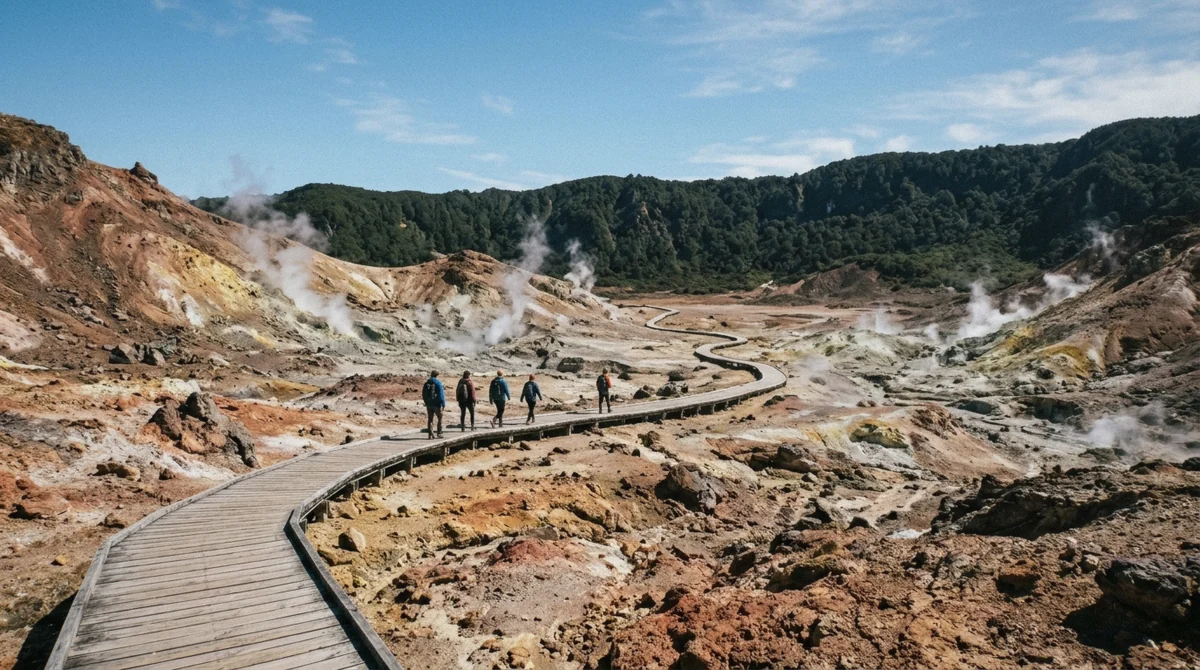
The valley is an explosion crater roughly 450 metres across, formed when Mount Hiyori erupted. What is left is a floor of altered rock stained rust, ochre and pale yellow by sulphur, with fumaroles venting high-temperature gas and hot springs bubbling up across it. Nothing grows on the crater floor.
The desolation is the reason for the name; jigoku is the Buddhist hell, and the folklore reading of the place as a demons' valley runs through everything the town sells, from the ogre statues on the main street to the festival in August.
The boardwalk loop
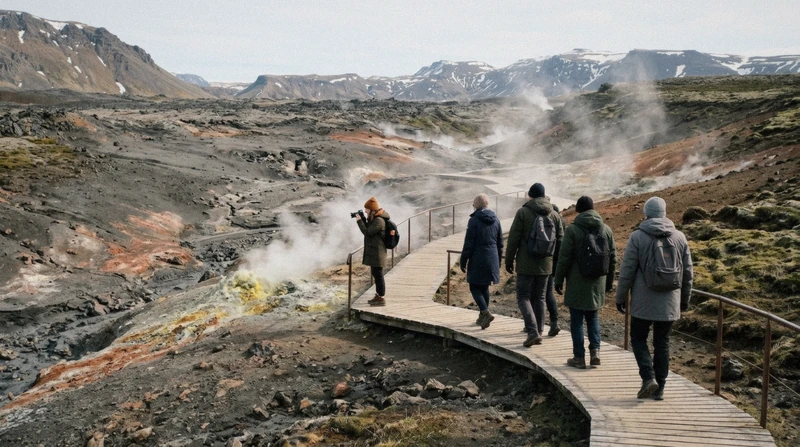
A raised wooden walkway runs from the car park out across the crater to a viewing platform, with the main vents alongside. Twenty minutes covers it comfortably including stops; the surface is flat and easy, though it can be slippery under snow. This is the section every tour visits and every photograph shows.
The water underneath
Noboribetsu Onsen draws from multiple spring types; sulphur, iron, alum, acidic, and the volume is famously large for a Japanese resort. All of it comes from what you are looking at. That connection is worth carrying into the evening: the bath at your ryokan is fed by this crater, which makes the walk and the soak the same story rather than two separate activities.
Past the Crater: Oyunuma and the Foot Bath
The half of the walk that the coach timetable cannot fit, and the reason to give Noboribetsu a morning rather than forty minutes.
Oyunuma
A boiling, sulphur-yellow pond that steams year-round, formed in the crater of the same volcanic complex. The surface temperature sits around 50°C and the water beneath it is far hotter. It is roughly a twenty-minute walk from Jigokudani through forest, uphill on the way out, and there is a viewing area rather than any access to the water itself.
In winter the contrast between the steam and the snow on the surrounding pines is the best photograph in Noboribetsu.
The Oyunuma-gawa natural foot bath
Downstream from Oyunuma the runoff cools into a river that runs through the forest at a temperature you can put your feet into. There are benches along the bank and a bath area where the water is right; it is free, unstaffed and open whenever you can walk to it. Bring a small towel; nothing is provided.
After the walk out and back it is the correct end to the morning, and it is the single most-recommended free thing in Noboribetsu among independent visitors.
Timing the whole loop
Base station to crater fifteen minutes, boardwalk twenty, on to Oyunuma twenty, foot bath and rest twenty, back to town thirty. Call it ninety minutes to two hours at an unhurried pace. Add ninety minutes at the bear park and you have used a morning well; a coach tour that allocates forty minutes to the crater and then drives an hour west to Lake Toya is doing something different.
Practicalities
Free, open and unstaffed, which puts more on you than a ticketed attraction does.
Cost, hours and access
There is no admission and no closing time; the boardwalk is lit in the evening during the summer months. The entrance sits about a fifteen-minute walk uphill from the Noboribetsu Onsen bus terminal, and the ropeway base station for the bear park is on the same short stretch of road, which is why the two pair so naturally. Parking is available at the crater for drivers.
What to wear
Proper shoes rather than sandals; the boardwalk is fine but the forest path to Oyunuma is a trail. In winter the whole route needs boots with grip and the operator of the bear park warns about snow underfoot on its own paths too. The sulphur smell is strong and gets into clothing; it fades, but it is a real thing rather than a figure of speech.
Safety and etiquette
Stay on the boardwalk. The ground either side is thermally active and the water in the vents is at boiling point. Do not put anything into the springs, and note that drones are banned at the bear park above and discouraged across the area.
The steam concentration varies with wind and temperature; on a cold still morning it can be thick enough to reduce visibility on the walkway.
Seeing Hell Valley on a Tour
Every Noboribetsu day trip out of Sapporo stops here. What differs is how long you get.
The standard allocation is forty minutes
The most-booked coach gives forty minutes, the all-fees-included tour the same, and the daily bus tour thirty-five. All of that is the crater boardwalk and nothing more. It is enough to see the thing; it is not enough to walk to Oyunuma.
The longer stops
The private samurai-village day allocates sixty-five minutes, which is the most of any listing here, and the private bear park tour about an hour alongside its ropeway stop. Private vehicles can flex; coaches cannot. If the walk matters; that is what you are paying the private premium for.
Or just go yourself
Nothing about Jigokudani requires a guide. It is free, signposted in English, and a fifteen-minute walk from a bus stop that the ¥2,500 highway coach from Sapporo serves directly. The independent version of this day costs less than the guided one and gives you three times as long on the ground.
The Walk, Section by Section
Timings at an unhurried pace with stops, measured from the Noboribetsu Onsen bus terminal.
How long each leg takes
Nothing on this route is difficult, but the second half is a forest trail rather than a boardwalk, and it is uphill on the way out to Oyunuma.
| Section | Time | Surface | Cost |
|---|---|---|---|
| Bus terminal to Jigokudani entrance | 15 min | Paved road, uphill | Free |
| Crater boardwalk and viewing platform | 20 min | Raised wooden walkway | Free |
| On to Oyunuma pond | 20 min | Forest trail, uphill | Free |
| Oyunuma-gawa natural foot bath | 20 min sitting | Forest path and benches | Free |
| Back down to the town | 30 min | Trail then road | Free |
How long each tour gives you
Every Noboribetsu day trip out of Sapporo stops at the crater. What separates them is the allocation, and none of them is enough for Oyunuma.
| Listing | Time at Jigokudani | Reaches Oyunuma? |
|---|---|---|
| Most-booked coach | 40 minutes | No |
| All-fees-included tour | 40 minutes | No |
| Daily bus tour | 35 minutes | No |
| Jozankei route | 40 minutes | No |
| Private bear park day | About 60 minutes | Yes, Oyunuma is a listed stop |
| Private samurai village day | 65 minutes | No |
| Independent, on foot | As long as you like | Yes |
Hell Valley Through the Year
The crater does not close and the walk works in every season, but what you get out of it changes completely.
Winter is the photograph
Steam against snow is the image Noboribetsu is known for, and the contrast at Oyunuma on a cold still morning is the best thing in the valley. The boardwalk stays open and is cleared; the forest trail beyond it needs boots with grip. Note that the steam concentration rises as the temperature drops, so on the coldest mornings visibility on the walkway can genuinely close in for a minute at a time.
The park above runs its own winter timetable, which every Noboribetsu Bear Park option sets out.
Autumn is the comfortable version
October brings maple colour to the slopes around the crater and daytime highs around 15°C, which is the right temperature for a walk that climbs. It is also when the coach tours are busiest, so the independent advantage is largest: arrive before ten and the boardwalk is quiet.
Summer evenings, and the lighting
The boardwalk is lit in the evenings through the summer months, which turns the crater into something worth walking twice. That is only available to people staying in the town rather than day-tripping, and it is one of the stronger arguments in the day trip or overnight question. For the wider plan, the Noboribetsu Bear Park ropeway ticket and this walk make a natural half-day together.
Hell Valley Questions
Is Jigokudani free?
Yes; no admission, no ticket, no closing time. The boardwalk is lit in the evenings during summer. Parking at the crater is paid for drivers.
How long do you need at Hell Valley?
Twenty minutes for the crater boardwalk, or ninety minutes to two hours for the full walk out to Oyunuma and the natural foot bath and back. Tours allocate thirty-five to sixty-five minutes, which covers only the first of those.
How do you get to Hell Valley from the Bear Park?
Walk. The Jigokudani entrance is about fifteen minutes from the ropeway base station, on the same road through the onsen town. That proximity is what makes a combined half-day work; see the bear park ticket.
What is the Oyunuma foot bath?
A stretch of the Oyunuma-gawa river where hot-spring runoff cools to a temperature you can sit with your feet in, with benches along the bank. Free, unstaffed, open whenever you can walk there. Bring your own towel.
Why is it called Hell Valley?
Jigoku is the Buddhist hell, and the barren, steaming, sulphur-stained crater floor was read that way long before tourism arrived. The town leans into it; ogre statues line the main street and an ogre festival runs in August.
Can you visit in winter?
Yes, and the steam against snow is arguably better than the summer version. The boardwalk stays open; wear boots with grip, and note that the ropeway to the bear park has its own weather and closure patterns in February.